Dublin is named after a pond nobody can see. Where the small river Poddle ran into the Liffey it formed a dark tidal pool, the Dubh Linn, the black pool, and the Viking town that grew beside it in the ninth century took its name from it. The Normans built Dublin Castle on the bank, the Poddle was later covered over and the pool filled in. The spot where the water lay is now a round lawn behind the castle, the Dubh Linn Garden, with paths laid into the grass in the shape of sea serpents and the Record Tower standing over it, the only medieval tower of the castle still standing.
On a bright morning in October that lawn is the greenest thing in the city, and the trees around it have started to turn. Green grass, a pale sky, orange leaves: it is the Irish flag without anyone having planned it. Codigrate's Dublin theme is that garden. What follows takes it apart color by color. It is the twelfth city in this series after Miami, Istanbul, Paris, Rio de Janeiro, Tokyo, Tallinn, Prague, Sydney, Vienna, Madrid and London, and the twelfth premium theme after Ocean, Salda, Prague, Sydney, Reynisfjara, Spring, Vienna, Madrid, Etna, Fuji and London. It is also the newest theme in the catalogue, so with this post every Codigrate theme has been taken apart once.
A Garden Behind The Castle
The theme's own description sets the scene: Dublin on a bright morning, a fresh park green base lit with shamrock green and the orange of the autumn trees around the castle tower. The palette names walk across the city. Ha'penny White is the cast iron bridge over the Liffey, painted white and named after the toll it once charged. Liffey Mist, Lawn Mist, Morning Sky and Castle Sky are the river air and the garden. Tricolour Green, Shamrock Green and Stephen's Green are the greens, the last one after the city's big square park, and Black Pool is the name of the city itself, used here for the darkest color in the theme. Autumn Blaze, Tricolour Orange, Maple Glow, Autumn Haze and Copper Leaf are the trees. Path Gold, Milky Coffee, Turf Haze, Hedge Bark, Warm Stone and Tower Shade are the gravel, the bark, the peat smoke and the stone. Dublin Sky, Kelly Green, Harvest Gold and Temple Bar Red are kept for the interface's notes, successes, warnings and errors.
The interface takes its accents from the trees. Autumn Blaze #E26B03 is the accent for links, changed settings and the line under the active tab, and Maple Glow #F08C2E is its second, the color a progress bar fills with and a selected tool window button turns. In the code the lawn does most of the work: a tricolour green #169B62 for the keywords and a shamrock green #1F9140 for the values.
The Harmony: Green, White And Orange
The Irish tricolour was first flown in 1848, a gift to Thomas Francis Meagher from a group of French women who supported the cause. The idea behind it is in its three bands: green for the Gaelic and Catholic tradition, orange for the Protestants who took their color from William of Orange, and white in the middle for a lasting peace between them. It is a flag about two colors that need something between them.
Dublin is built the same way. The greens sit between 134 and 158 degrees on the wheel: every background, the selection, the caret, the line numbers, and in the code the keywords, strings and numbers. The oranges and browns sit between 26 and 44 degrees: the accents, the active tab, the text selection, and in the code the fields, methods, static members, tags, parameters, attributes, globals and annotations. The two families are about 110 degrees apart, which is no textbook harmony at all, neither neighbors nor opposites. What makes them work together is the white. The editor page is a near white, so in any line of code the green and the orange each sit on the white rather than on each other, exactly as on the flag.
The split also runs along temperature, in a way most themes do not try. The greens are the cooler half and they are given the frame and the grammar of the code. The oranges are the warm half and they are given the objects: whatever you reach into with a dot comes out orange or brown.
Backgrounds, From Paper To Park
Dublin's backgrounds are four light surfaces, and the further from the code, the greener they get:
- Input #FFFFFF, plain white, for search fields and dialogs.
- Editor #F1F9F3, Ha'penny White, the page the code is written on.
- Window #D3F3DB, Liffey Mist, for the tool windows and panels.
- Surface #6CC682, Castle Sky, the outer frame the whole window sits in.
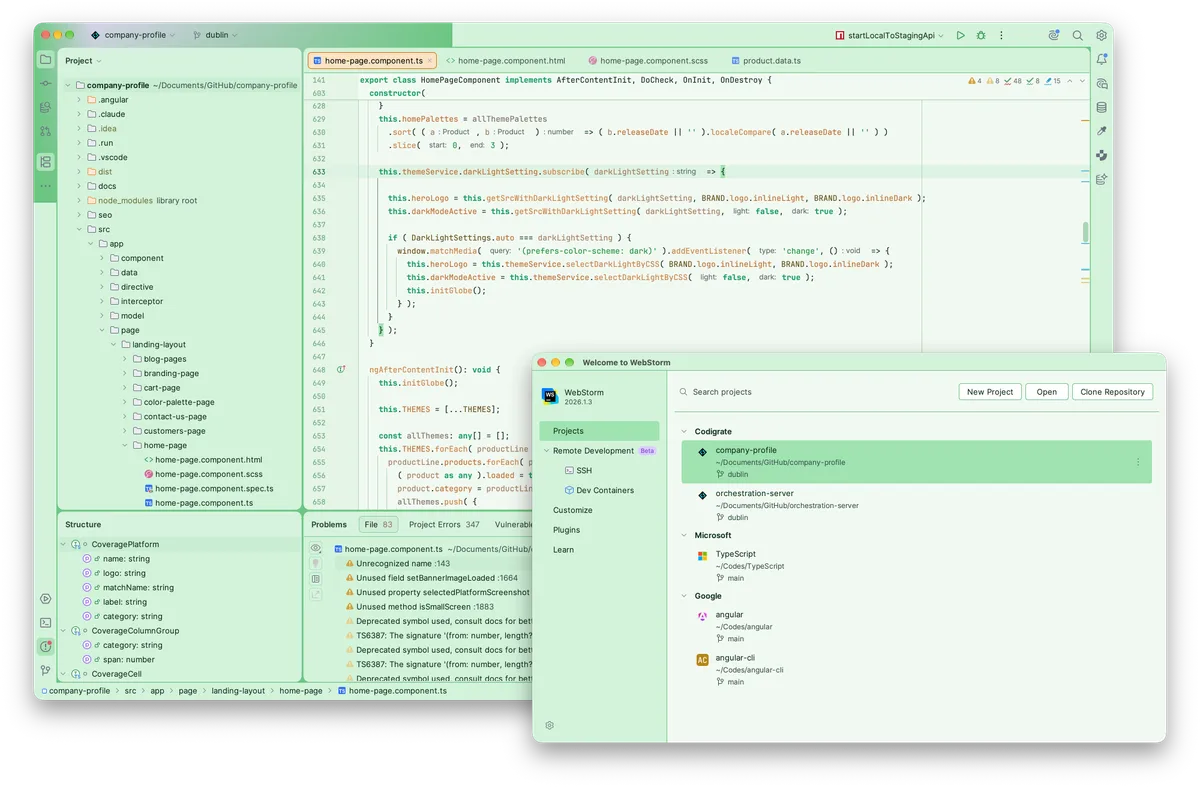
All of them sit on one hue, 135 degrees, and the lightness falls from 96 percent for the editor to 89 for the panels and 60 for the frame. That frame is one of the strongest in any light theme in this series, a real grass green rather than a tint, and the borders and separators use it too, so every panel is cut out of the lawn. It is the same idea as Spring, which also keeps its green for the edge of the window, but Spring's frame is a pale new grass and Dublin's is a park in full summer. Labels on the frame are dark enough to read at about 7:1. Hovering a row lights it Lawn Mist #AAE4B8.
Selections in the interface stay green. A selected row in the project tree is Morning Sky #A0E3B1 edged in Tricolour Green, and when the window loses focus it fades to #C9EDD2 with a #7EC890 edge. The orange comes in where the window points at something. The active editor tab sits on a pale apricot #FBE3C3 underlined in Autumn Blaze, search matches in the interface glow Path Gold #FACA73, and selected text in the editor takes the same apricot as the tab, with the code still at about 11.8:1 on it.
The editor's own marks split along the flag as well. Search results in the code are a dark copper #7C4A12 on a pale gold #FDEBC8 edged in Tricolour Orange #CF6106. The word under the caret turns Stephen's Green #1B6B3A on a pale green #D3F0DA where it is read, and a burnt orange #9E4F10 on the apricot where it is written to, so reading is green and writing is orange. A matched brace sits on Morning Sky.
The status colors come from the rest of the city: Harvest Gold #D6A03A for warnings, Kelly Green #4CBB17 for success, Dublin Sky #2F86C8 for information and visited links, the only blue in the theme, and Temple Bar Red #C5453E for errors.
One Foreground, Several Voices
Code is written in Black Pool #0F2E1A, a green so dark it reads as black, at about 13.7:1 against the page. Class names, function names and constants keep the same color, so the names in a file are the plain dark lines of the drawing and the colors sit around them. The interface uses Black Pool for its labels too and Tower Shade #3B564C, a grey green, for hints and secondary labels at about 7.5:1 on the editor.
Comments are a grey #7F8C86 with only 5 percent saturation, at about 3.3:1, below the 4.5:1 the readability post suggests for body text. They are the one thing in a Dublin file with almost no color, and all three kinds, line, block and doc comments, are set in italics, so a note never looks like code. The tags inside doc comments are bold.
Keywords are bold too. On a page this bright the tricolour green sits at about 3.3:1, and the weight is what lets the structure of a file show at a glance while the green stays as fresh as a lawn.
The gutter is a pale green #E4F4E7, a step toward the panels. Line numbers are a soft lawn green #70A97E at about 2.6:1, and the number on the current line deepens to Stephen's Green, the same color as the caret. The current row is #E0F3E4, barely greener than the page. Indent guides are drawn in #A9DAB5, and the guide of the block you are in deepens to #7EC890.
Syntax: Lawn, Leaves And Bark
Open a file and the garden fills in:
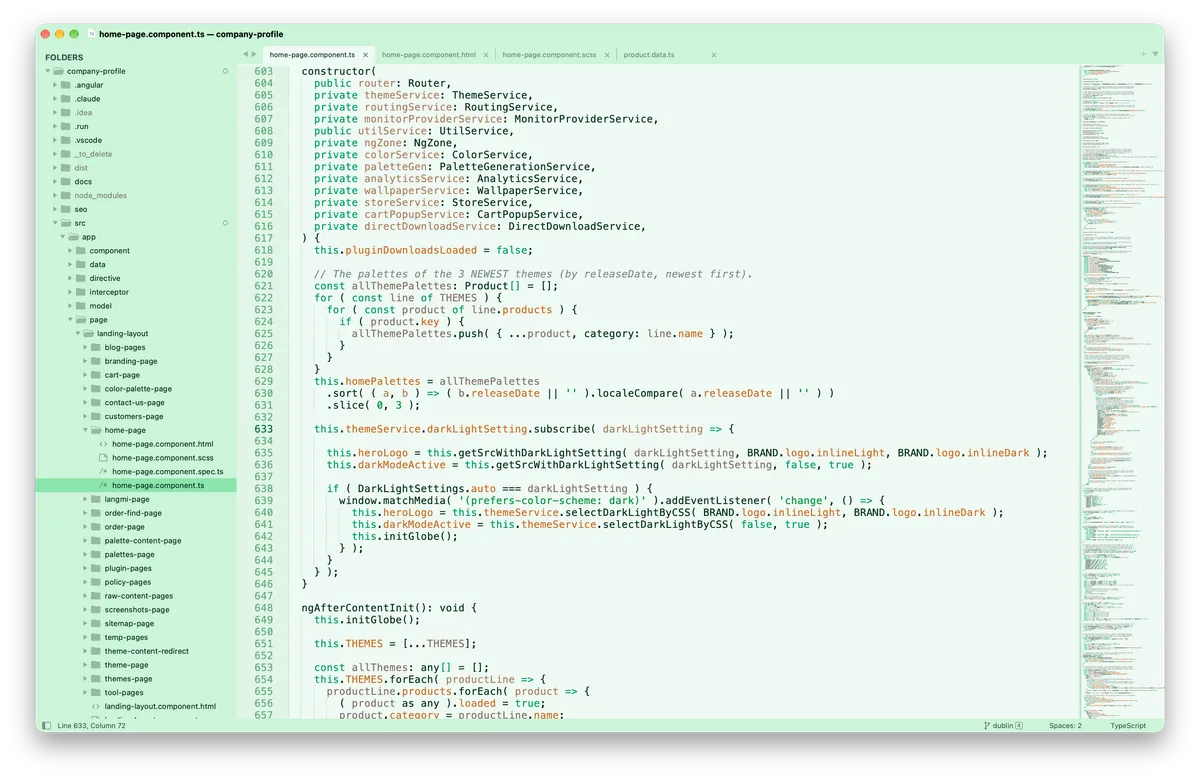
- Keywords in bold tricolour green #169B62, the green of the flag.
- Strings, numbers and escapes in shamrock green #1F9140, a leafier green than the keywords.
- Instance fields and methods in autumn haze #BD7135, and JavaScript member functions in a lighter orange #C98449.
- Static fields and methods in copper leaf #A34C08, the darkest orange, a leaf that has been down a week.
- HTML and XML tags in tricolour orange #CF6106, and attributes in turf haze #8A6A4B.
- Parameters in milky coffee #A38063.
- Local variables in warm stone #7D7166, nearly a grey.
- Global variables in hedge bark #654E1A, a dark olive brown.
- Annotations in an old gold #A07D1C.
- Class names, function names and constants in Black Pool #0F2E1A, and inline hints in a grey green #56695F.
Read a few lines and the flag shows up in the code. The green marks the grammar, the keywords that open and close things and the values written straight into the file. The orange marks everything that hangs off an object, the fields and methods and the static members, with the tags of a page in the same orange because they are the objects of a document. The browns take the quieter roles, parameters, attributes and globals, like bark and gravel around the bright parts of a garden, and the locals stay a soft stone grey so the eye can pass over them.
The Final Product
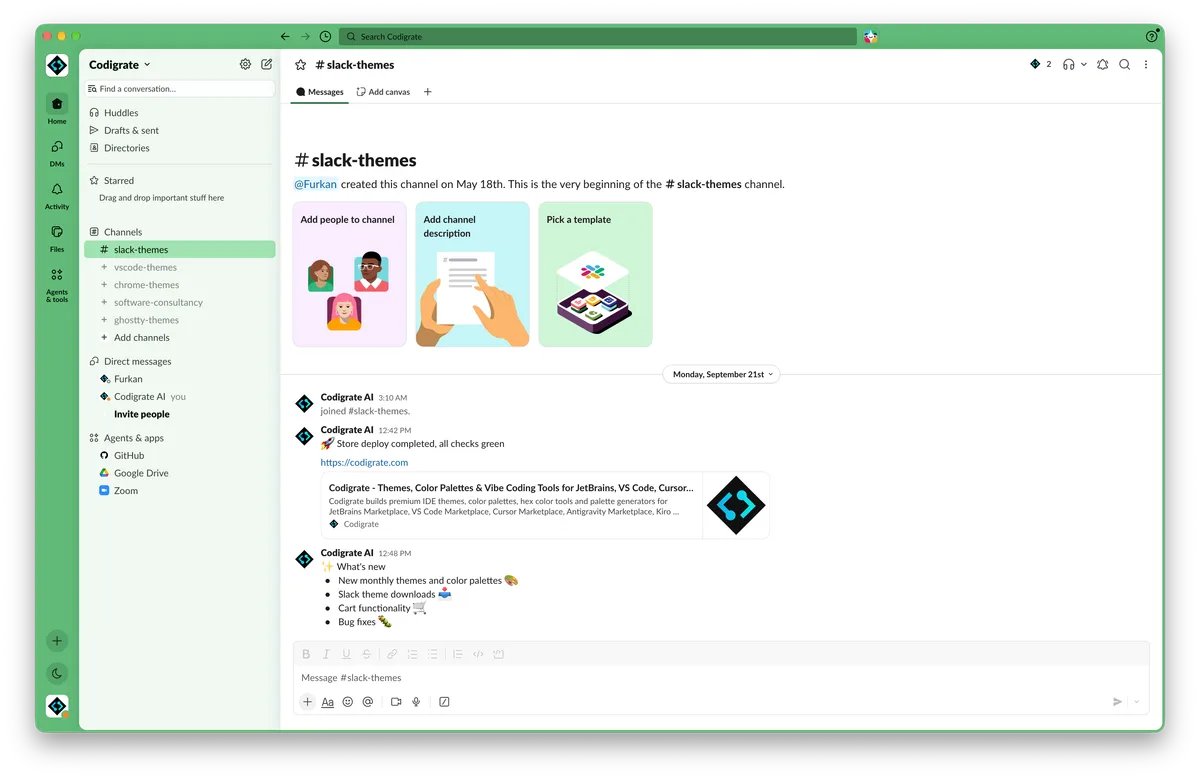
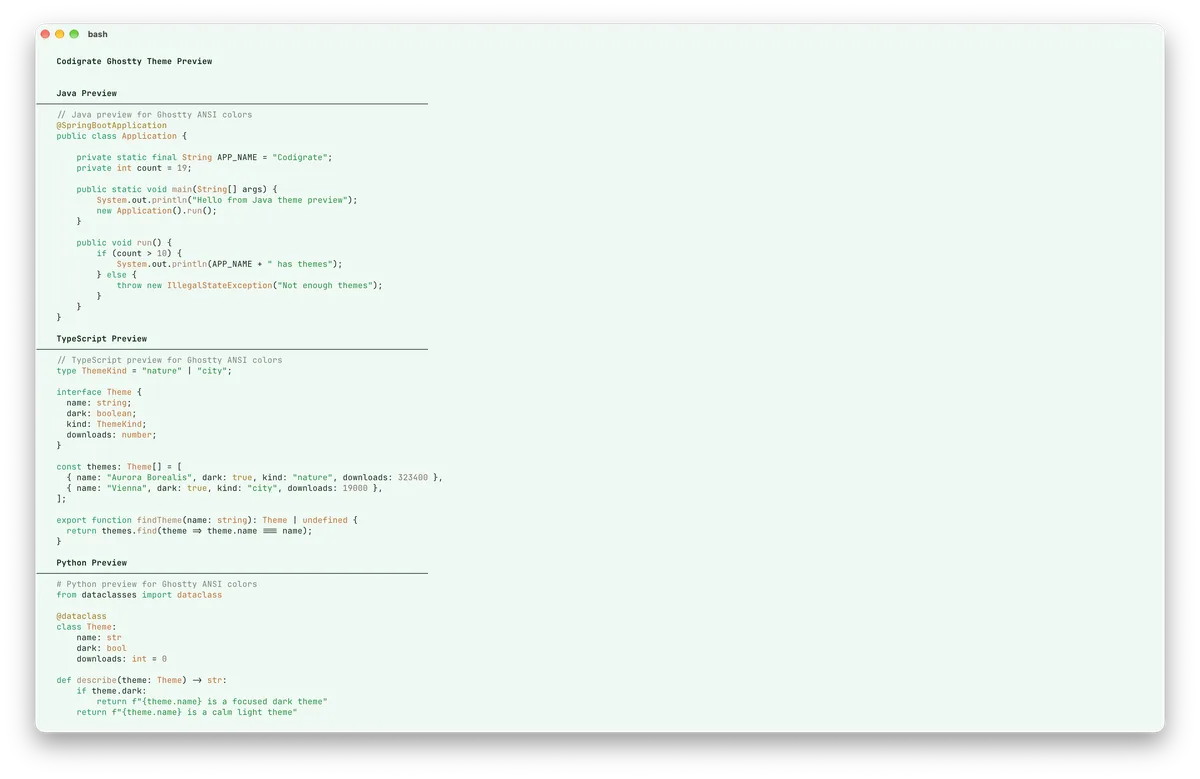
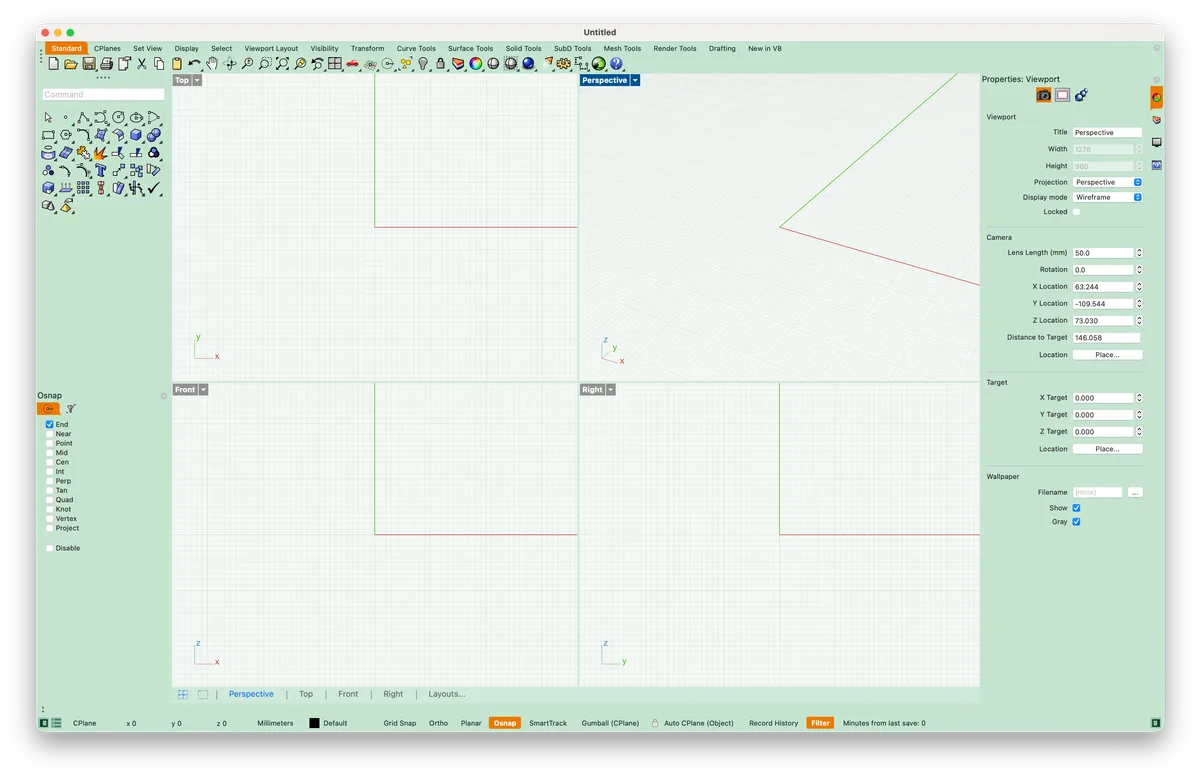
Here is Dublin put back together. The park green frames a JetBrains IDE with an apricot tab and Sublime Text keeps the same greens and oranges on the same white page. Slack goes green around the chat with a pale green row for the channel you are in, Ghostty prints in greens and oranges on the white, and in Rhino the panels take the lawn green with Autumn Blaze marking the active tab and the snaps you have turned on.
Explore Our Themes
Reading It Back
Taken apart, Dublin is a flag laid out as a garden. The frame is the lawn, a real green that gets paler toward the middle until it is almost white where the code is. The syntax splits along the tricolour, green for the grammar and the values, orange and brown for the objects, with the white page keeping the two apart. The interface follows the same rule: green when it is showing you where you are, orange when it is pointing at something.
It is a theme for bright mornings and long days, cheerful without being loud, and green right to the edges. Dublin is a premium theme: a paid plugin for JetBrains IDEs on the JetBrains Marketplace and part of the All In One bundle, a one time purchase for Xcode, Zed, Sublime Text, Ghostty, iTerm2, macOS Terminal, Claude Code, Slack, Rhino and Firefox from the Codigrate store, and a LINE theme in the LINE theme shop, all from its theme page.
Frequently Asked Questions
What is the Dublin theme?
Dublin is one of Codigrate's premium light city themes, built around Dublin on a bright autumn morning: the round tower of Dublin Castle over a green lawn, with the trees around it turning orange. The frame of the editor is a park green, the code is written on an almost white page with a breath of green in it, and the syntax is the lawn and the trees: tricolour green keywords, shamrock strings and numbers, and autumn oranges and browns for the fields, methods, tags and the rest of an object.
Why is the frame of Dublin so green?
Because the city is named after a garden, in a way. Dublin comes from Dubh Linn, the black pool, and the place where that pool once lay is now a round lawn behind Dublin Castle. The outer frame of the theme is Castle Sky #6CC682, a real mid green at 60 percent lightness, the panels are Liffey Mist #D3F3DB and the editor Ha'penny White #F1F9F3. All three sit on the same hue, 135 degrees, so the window reads as one park and the page in the middle as the brightest part of it.
How are the syntax colors chosen in Dublin?
They follow the Irish tricolour: green, white and orange. The page is the white. The greens, between 137 and 154 degrees, carry the structure and the values: tricolour green keywords in bold and shamrock green strings and numbers. The oranges and browns, between 26 and 44 degrees, carry everything that belongs to an object or a document: autumn haze fields and methods, copper leaf static members, tricolour orange tags, and coffee and turf browns for parameters, attributes and globals. Local variables and comments stay close to grey.
Where can I get the Dublin theme?
Dublin is a premium theme. On JetBrains IDEs it is a paid plugin on the JetBrains Marketplace and is also part of the All In One bundle. For Xcode, Zed, Sublime Text, Ghostty, iTerm2, macOS Terminal, Claude Code, Slack, Rhino and Firefox it is a one time purchase from the Codigrate store, delivered as a download, and the LINE version is sold in the LINE theme shop. All of them are linked from the Dublin theme page.
