Lake Salda sits in the hills of Burdur, in the southwest of Turkey, and from the right spot on its shore it does not look like it belongs there. The water is so clear that the bottom shows a long way out, it runs from a pale turquoise over the shallows to a dark blue where the lake drops away, and the beach is not the brown or grey of most lakes but a bright, almost chalky white. People call it the Maldives of Turkey, which undersells it a little. The white is hydromagnesite, a carbonate built up over thousands of years partly by microbial mats in the water, and it is close enough to what lies on the floor of Jezero Crater on Mars that NASA scientists came to study it before the Perseverance rover landed there.
Codigrate's Salda theme is the lake on a bright morning: the frame is the white shore, the code is the water. What follows takes it apart color by color. It is the eighth nature theme in this series after Aurora Borealis, Everest, Sequoia, Autumn, Roraima, Sakura and Ocean, and the second of the premium themes, after Ocean. Where Ocean goes under the water, Salda stays on the beach and looks out at it.
A Shore And Its Shallows
The theme's own description puts it simply: the white shores and turquoise shallows of the lake, warm sand and soft cream backgrounds, clear lagoon blues and teals, and a fresh reed green for the syntax that matters. The palette names walk from the beach into the water: Shell White, White Sand, Warm Shore, Sandbank, Dune Edge and Driftsand on the dry side, then Shallow Turquoise, Soft Lagoon, Bright Lagoon, Lakeshore Blue, Shaded Lagoon and Reed Green as the lake gets deeper, with Cedar Bark, Dark Cedar and Clay Bank for the hills and trees behind it.
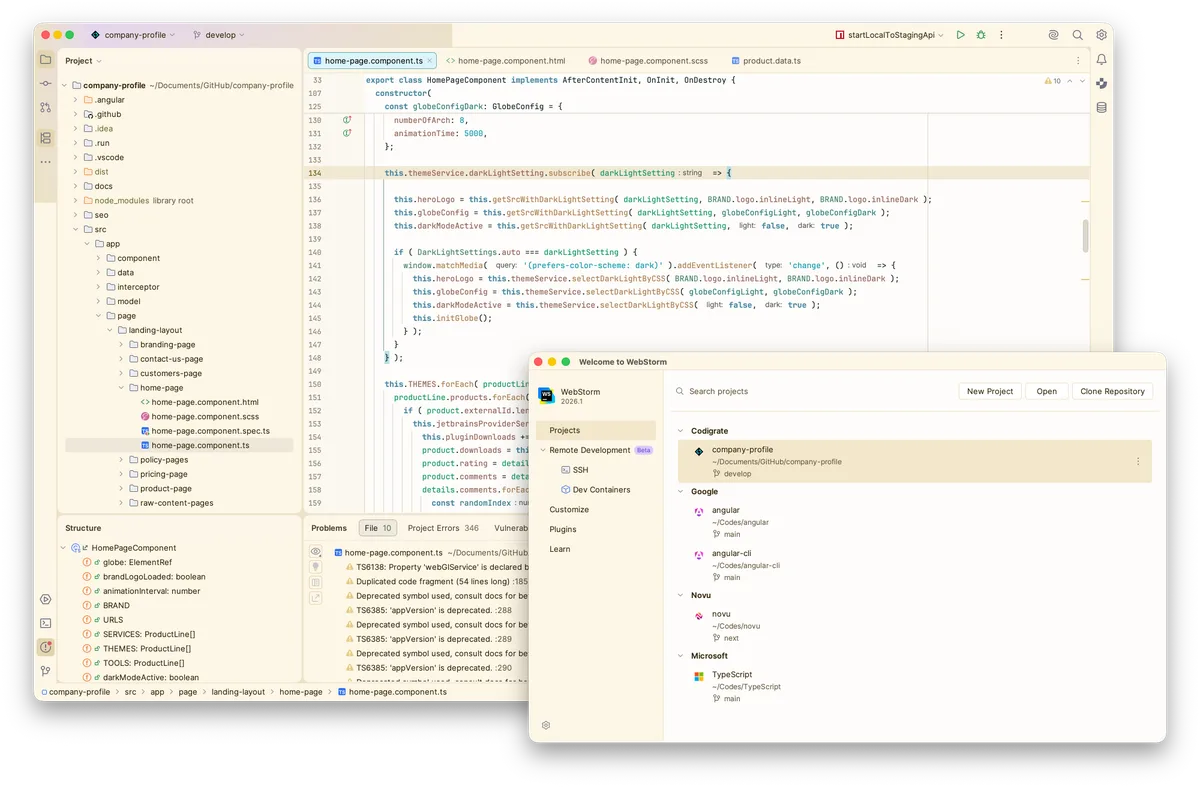
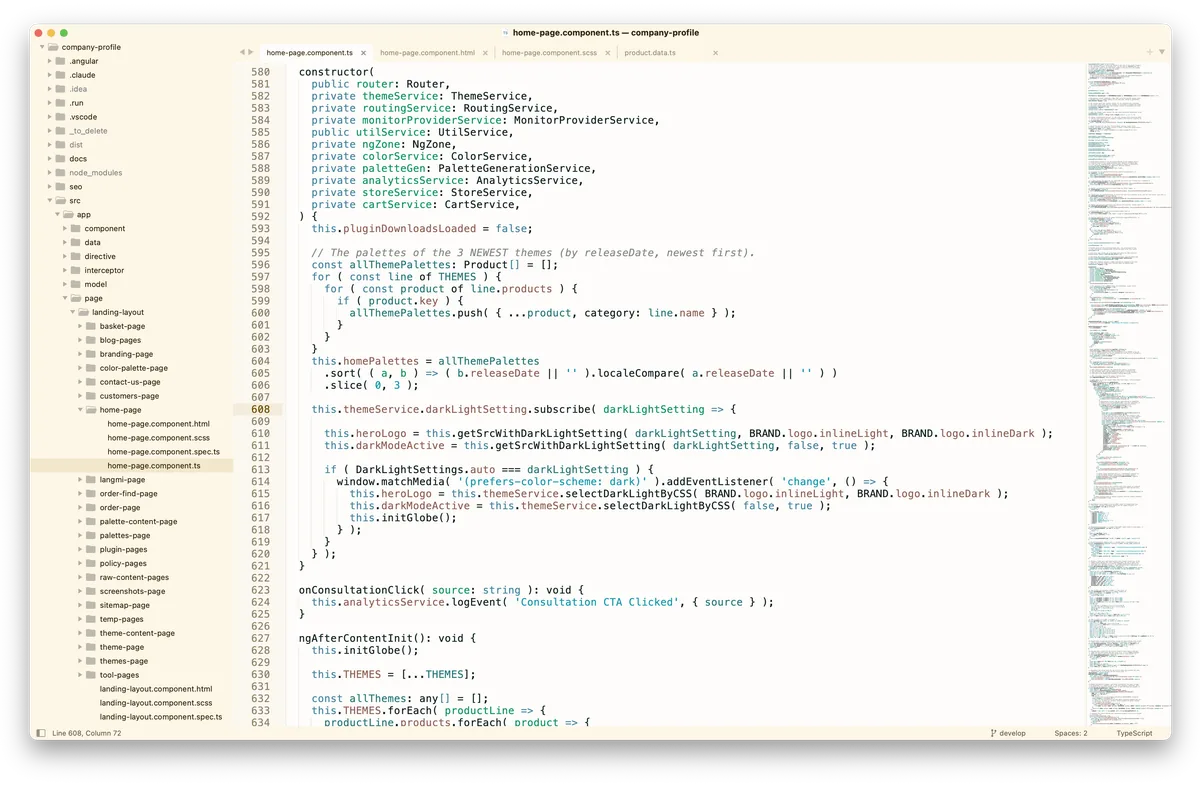
Most of the window is sand. The backgrounds, the selected rows and the gutter all sit near one warm hue, around 41 degrees, and differ only in how much light they hold. A cedar brown #715827 is the accent of the interface, used for links and the small marks that need to stand out, with a bright lagoon #28B6CE as its second accent. The water is laid on top of it in the code: a lakeshore blue #44849F, a bright lagoon #1397AE, a shaded lagoon #277878 and a reed green #0F9363, with a clay bank #8F6055 as the one warm voice that gets a real job.
The Harmony: Sand Against Water
On a wheel, Salda is a complementary theme with the halves given very different jobs. The sand is one point, near 41 degrees: every background, the interface text, the caret, the line numbers. The exact opposite of 41 is 221, a blue, and that is where the water is. The syntax colors fan out on that side of the wheel: reed green parameters at 158, the shaded lagoon of local variables at 180, the turquoise of strings at 189, lakeshore blue keywords at 198, the blue of tags at 205, and static members in a deep blue at 222, almost exactly across from the sand.
The warm colors that do appear in the code stay close to the shore instead of crossing over. Fields and methods are a clay at 11 degrees, attributes a reddish clay at 16, JavaScript member functions a light cedar at 30 and annotations a driftsand at 35. So the wheel splits into a frame and its members on the warm side and the language itself on the cool side. On screen that reads the way the lake does from the beach: everything you stand on is sand, and everything you look at is water.
Backgrounds, Grain By Grain
Salda's backgrounds are four kinds of sand, from the brightest to the deepest:
- Input #FFFFFF, shell white, the only true white in the theme, used for search fields and text boxes.
- Editor #FDFCFA, white sand, the page the code is written on.
- Window #FDF6E7, a warm shore for the tool windows and panels.
- Surface #ECE1C9, a sandbank for separators and the frame around them.
The editor and the windows sit very close in lightness, and that is on purpose. In a light theme big steps between panels make the screen look busy, so Salda separates them by warmth instead: the editor is the coolest of the sands, nearly white, and the windows around it lean a little more toward cream. The gutter is a sand #FBF8F1 half a shade warmer than the page, and the current line is marked by a wet sand #F1E8D3, like the strip of beach the last wave just left.
Selections stay on the shore too. Selected text in the editor turns a darker sand #EAD5BF, and a selected row in the project tree is a dune #F3E7CC edged in #B9A373. Hovering over a row darkens it to #E3D4AF.
The water enters the frame in only one place. The active editor tab sits on a pale turquoise #DCF4F8 with a soft lagoon underline #68B0BC, so the file you are in is the one patch of shallows in a window full of sand. Search works the same way: matches are a lagoon #288393 on a near white turquoise #E9F8FA, the word under the caret is a deep blue #0B5788 on #C9E5F7, and a place where that word is written to turns green, #05753E on #C1E6D4, so reads and writes are told apart at a glance.
One Foreground, Several Voices
Here Salda does something small and easy to miss. The code and the interface do not share a text color. Code is written in #102020, a near black with a trace of deep lake teal in it, at about 16.4:1 against the editor. The menus, labels and tree around it use a dark cedar #312408 at about 14.8:1, warm instead of cool, and one level down a shore shadow #685C43 at about 6.4:1 for hints and secondary labels. Both darks are far from pale, but the eye still feels the difference: the code belongs to the water, the interface belongs to the land.
Comments step back into a neutral grey #868888 set in italics, at about 3.5:1. That is quieter than the sea foam comments of Ocean, which suits a light theme, where a grey on white already reads as a side note. It sits one rung below the code on the ladder from the readability post, and the italic does as much as the color to tell you that you are reading a note and not an instruction.
The gutter is driftwood. Line numbers are a muted sand brown #8E8267, the number on the current line darkens to a deep cedar #6F4E06 at about 7.4:1, and the caret is a cedar bark #8D7540, so your position on the left edge is marked in the color of the trees above the shore rather than in a bright blue.
Syntax: The Colors Of A Clear Lake
Open a file and the water fills in:
- Keywords in bold lakeshore blue #44849F, the most common colored words in any file, in the calm blue of the lake seen from the beach.
- Strings, numbers and escapes in bright lagoon #1397AE, the turquoise of the shallows and the brightest color in the editor. At about 3.4:1 it is the lightest of the text colors, a fair trade for the most saturated one.
- Local variables in shaded lagoon #277878, the same water where it gets deeper, at about 5:1.
- Parameters in reed green #0F9363, the reeds at the water's edge, and global variables in a softer sage #497E6B.
- Static fields and methods in a deep blue #405891, the darkest water in the palette at about 6.8:1, where the lake drops away.
- Instance fields and methods in clay bank #8F6055, the one warm color that marks a real role, and JavaScript member functions in a lighter cedar #AA7D4F.
- Tags in a lake blue #3F7FAE, set in bold for HTML and XML tag names, attributes in a reddish clay #9E7363, and annotations in driftsand #A59379.
Class names, function names and constants stay in the deep lake near black #102020. That is the same choice the dark themes in this series make with their light greys: the names hold the structure of a file, so they are left plain, and the color is spent on the keywords, the values and the variables you are actually tracing.
The Final Product
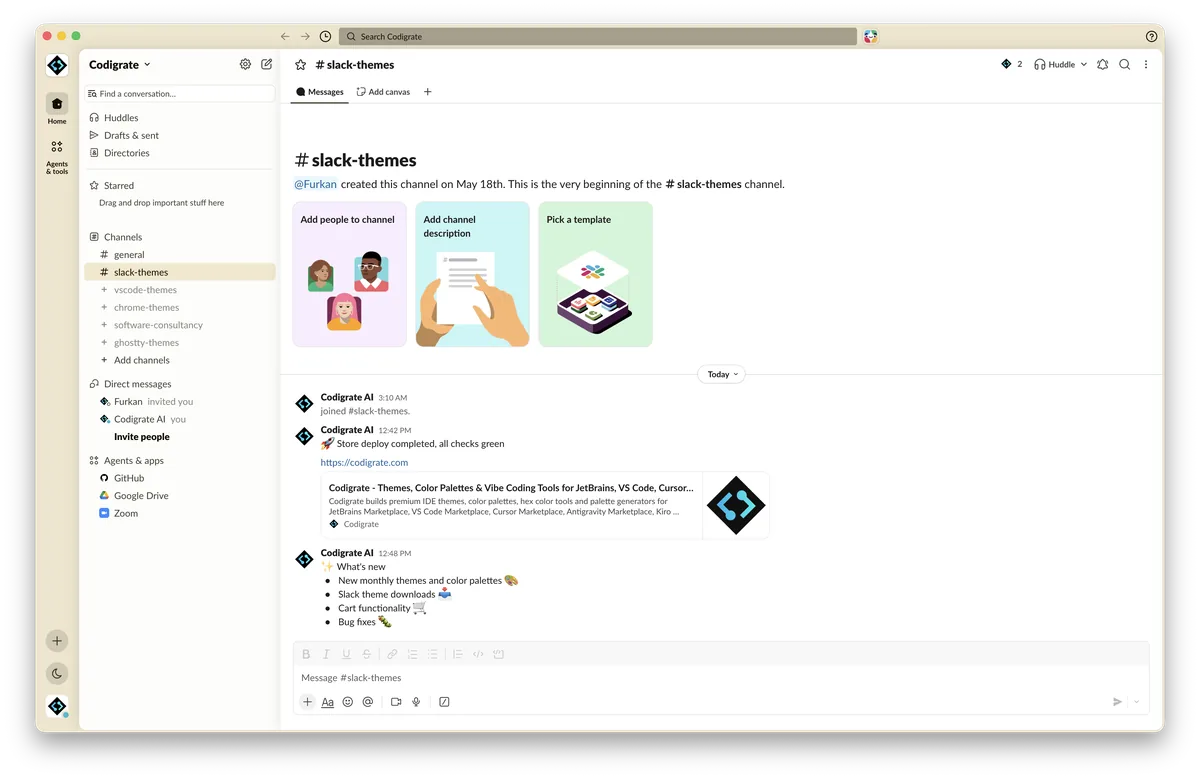
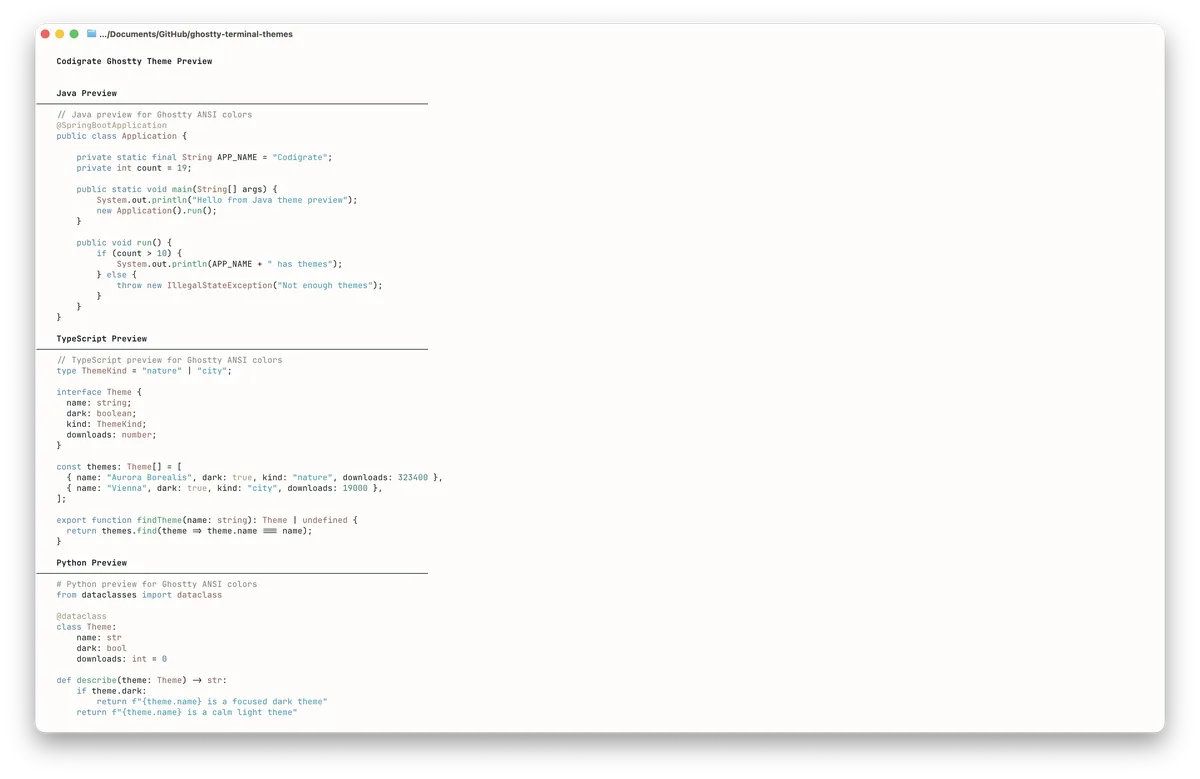
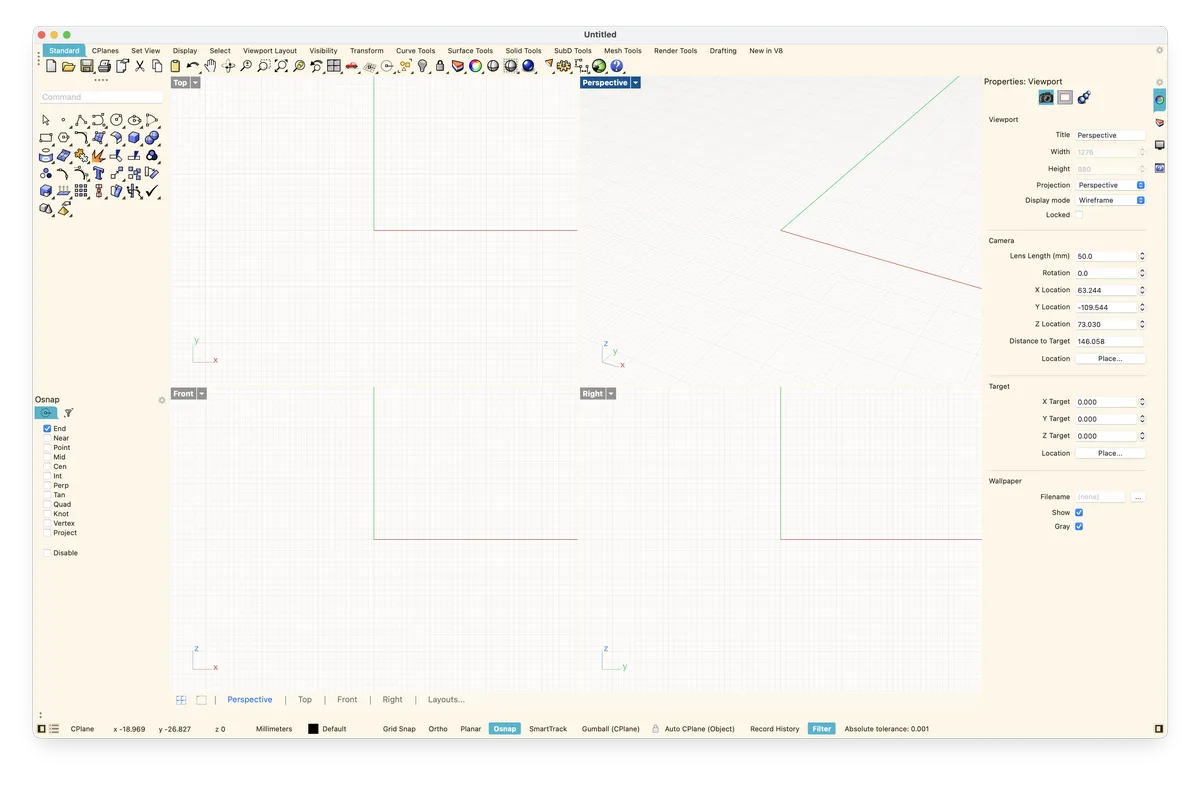
Here is Salda put back together. The white sand fills a JetBrains IDE and Sublime Text, Slack and Ghostty keep the same bright shore around the chat and the shell, and in Rhino the viewports turn pale enough to feel like modeling on the beach, with lagoon blue on the active tab and the switches that are on.
Explore Our Themes
Reading It Back
Taken apart, Salda is a beach and a lake. The backgrounds, the gutter, the selections and the interface text are all sand, from shell white to dark cedar, so the frame stays warm and quiet. The code is the water, set on the opposite side of the wheel: lakeshore blue keywords, turquoise strings, a shaded lagoon for locals, reeds for parameters and a deep blue for statics, with clay kept for the members so the warm side still has a voice. Even the text color is split between the two, a lake tinted black for code and a cedar black for everything around it.
It is a theme for daylight, for a desk by a window and a long morning of work, which is also the best time to see the lake. Salda is a premium theme: a paid plugin for JetBrains IDEs on the JetBrains Marketplace and part of the All In One bundle, a one time purchase for Sublime Text, Ghostty, iTerm2, macOS Terminal, Slack and Rhino from the Codigrate store, and a LINE theme in the LINE theme shop, all from its theme page.
Frequently Asked Questions
What is the Salda theme?
Salda is one of Codigrate's premium light nature themes, built around Lake Salda in southwestern Turkey, a deep, very clear lake with a shore of bright white sand. The frame of the editor is the shore: white sand, a warm cream and a darker sandbank, with dark cedar text. The code is the water: lakeshore blue keywords in bold, bright lagoon turquoise for strings and numbers, a shaded lagoon teal for local variables and a reed green for parameters, with a clay brown kept for fields and methods.
Why does Salda use warm sand backgrounds instead of pure white?
Because a white that leans warm is easier to sit in front of all day than a cold paper white, and because the shore of Lake Salda is not pure white either. The editor is a white sand #FDFCFA, the tool windows a warm shore #FDF6E7 and the outer frame a sandbank #ECE1C9, all near a hue of 41 degrees, so the panels separate by a little more or a little less sand. Only the input fields go to a true white #FFFFFF, which makes the place you type the brightest spot on screen.
How are the syntax colors chosen in Salda?
They come from the water side of the lake. The sand of the frame sits near 41 degrees on the color wheel and almost every syntax color sits across from it, between 158 and 222 degrees: reed green parameters, a shaded lagoon for locals, bright lagoon turquoise for strings, lakeshore blue keywords and a deep blue for static members. The few warm colors, a clay brown for fields and methods, a reddish clay for attributes and a driftsand for annotations, stay close to the sand so the frame and the members feel like the same shore.
Where can I get the Salda theme?
Salda is a premium theme. On JetBrains IDEs it is a paid plugin on the JetBrains Marketplace and is also part of the All In One bundle. For Sublime Text, Ghostty, iTerm2, macOS Terminal, Slack and Rhino it is a one time purchase from the Codigrate store, delivered as a download, and the LINE version is sold in the LINE theme shop. All of them are linked from the Salda theme page.
